What this site is for
String Warrior serves dozens of instruments from one set of data. That is the whole point of it: a chord, a scale, or a key is rendered against whatever tuning you pick, so you can hold a mandolin, a bass VI, and a tenor guitar up against each other and see what actually transfers. Nowhere else in the network can do that, because nowhere else is asked to know every tuning at once.
Breadth has a price, and this page is where we admit it rather than paper over it. A page here is written to be correct for dozens of instruments, which means it is written for none of them in particular. It will draw you a fiddle chord and never mention the bow; it will hand a banjo player a grip without a word about which roll goes under it. Repertoire, technique, gear, and the habits of the people who actually play the thing are all depth a wide site cannot spend. When you want that, you want one of these.
Where to go instead
 Theory WarriorThe layer under every diagram here: why the notes are those notes, argued with no instrument in the picture at all.
 Keys WarriorThe other hub. This one draws a chord across twenty-odd tunings; that one draws seven keyboards whose difference is not shape but voice architecture — how many notes the instrument can sound at once, and what happens when you ask for one more.
 Ukulele WarriorWe render four uke tunings correctly and stop; that site knows which of them people actually use, and what a reentrant top string does to a chord you thought you knew.
 Bass WarriorHere the bass is one instrument among dozens and gets chord shapes like the rest; there it gets lines, which is what bass playing is mostly made of.
 Mandolin WarriorOur fifths-tuned diagrams are accurate and characterless; the chop chord, the tune repertoire, and what happens at a jam are that site's subject and not ours.
 Guitar WarriorCAGED, capos, alternate tunings, and gear written for six strings and nothing else, at a depth a page that also has to serve the cuatro cannot reach.
 Banjo WarriorThis site is almost entirely a left-hand site, and the banjo is largely a right-hand instrument; the rolls and the drone string live over there.
 Fiddle WarriorWe draw the violin fingerboard as though it had frets, which is a useful lie; bowing, position work, and intonation need a site that refuses to tell it.
 Ear WarriorThis site can draw the same chord in twenty-odd tunings and never once make you identify it. That one plays a sound and waits — then publishes which answers people keep swapping for which.
 Bluegrass WarriorWe answer one instrument at a time; that site answers a band at a time — who takes the break, who backs it, and how the seats fit together.
 Music Warrior NetworkThis site answers across instruments and sends you sideways to a deeper one when it has to; that site is the map of the whole network — which sister owns which question, who each is written for, and which door to try first.
 Nashville WarriorThis site answers what a chord looks like here; that one answers what the chord is called tonight. A page stored as digits survives the key change that rewrites every letter name on a chord sheet.
 Mariachi WarriorTwo of these necks carry no frets at all and a third is re-entrant — a set this site can draw but not explain. That one reads all four as section work rather than as solos.
 Jazz WarriorHere a chord is an entry in a matrix and every one of them is present. There a chord is a choice made against the bar in front of it — which one can stand in for it, and where the tune goes next — which no amount of enumeration produces.
 Country WarriorA chord shape is a fact; which chair plays it, and on which beat, is not. That site assigns the same shapes to a whole band — who holds the floor, who answers, who stays quiet — for a music this one can only draw one instrument at a time.
 Tres WarriorWe draw the tres's three courses accurately and stop there; what a figure does when it loops instead of travelling, and which course carries which eighth note, is a subject a page that also has to serve the banjo cannot reach.
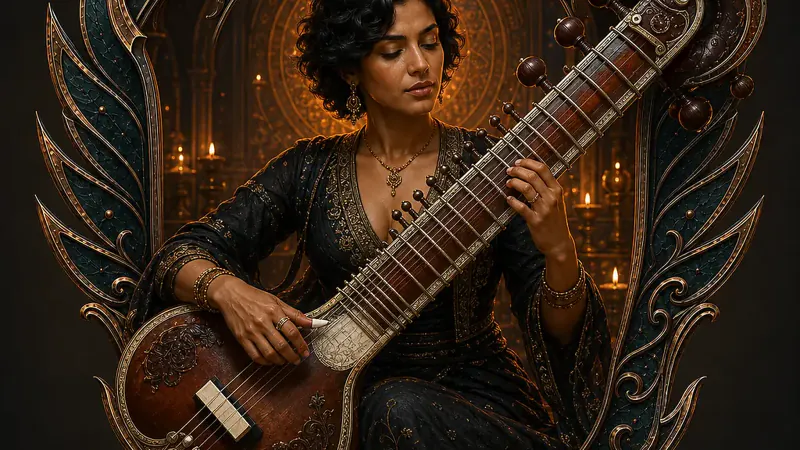 Sitar WarriorWe draw the sitar's five CGCGC strings the way we draw everything else, which is accurate and beside the point — the ten thaats, the frets that move under the string, and the drone that decides what a note means all need a site that starts from the raga rather than the chord.
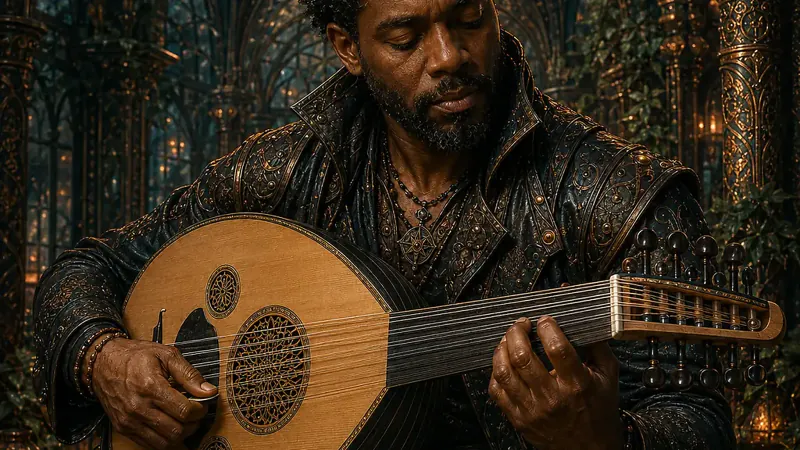 Oud WarriorOur diagrams draw the oud's positions as though they were frets, which is a useful lie this site admits to; the ajnas that actually build a maqam, and the neutral intervals twelve equal steps cannot spell, need the site that starts from the bare fingerboard.
 Cuatro WarriorTwo instruments answer to "cuatro" — ten steel strings in five courses in Puerto Rico, four nylon in Venezuela — and a page rendering both from one registry can only list them. Keeping them apart, and saying which music each belongs to, is that site's whole subject.
 Charango WarriorThis site tunes every instrument it draws and moves on. There the tuning is the argument: GCEAE puts the five courses out of pitch order on purpose, so a shape you know from anywhere else lands as a different chord entirely.
 Cavaquinho WarriorHere the chord is the entry and the right hand is left to you. There the right hand is the entry: which eighths go down, which go up, which are chopped into a mute, and what note that mute leaves on top.
How the sites divide the work
Every instrument family has exactly one deep home. The guitalele belongs to Ukulele Warrior and the bass VI to Bass Warrior even though both have another instrument's name in them, because kinship in this network follows tuning and repertoire rather than spelling. String Warrior is the deliberate exception: it carries all of them so that side-by-side comparison has somewhere to live, and it links out rather than growing a shallow section per family.
The list above is every sister open today. Others are still being built, and each will appear in the list the day that site opens.